
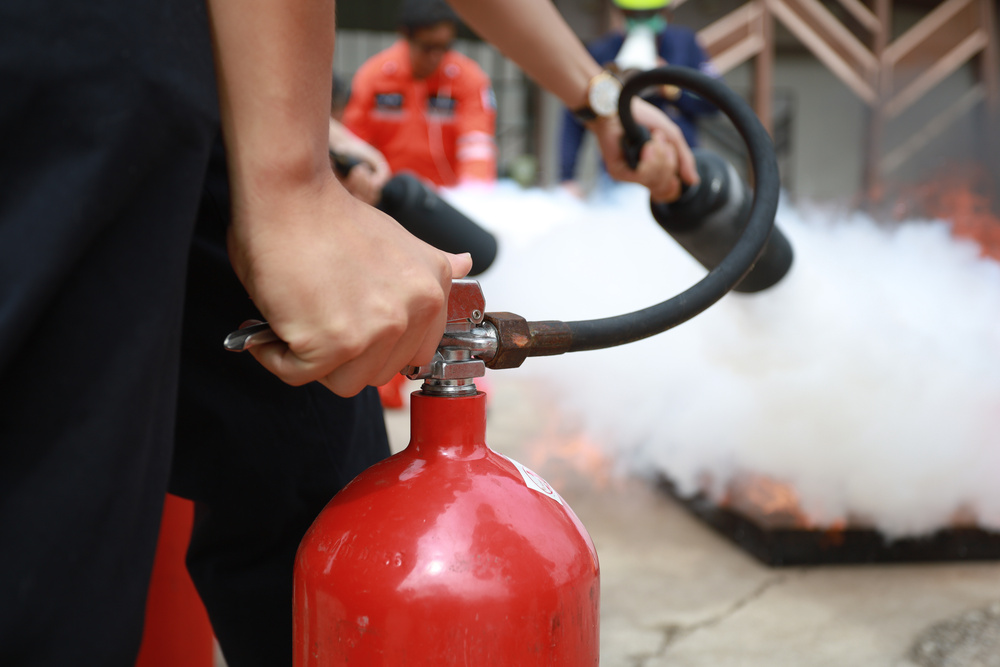
Fire safety training gives employees a clear plan for the first moments of a fire emergency. The RACE and PASS methods offer simple, memorable steps for evacuating safely and operating a fire extinguisher correctly. For businesses across Greater Cincinnati, Dayton, and Southern Ohio, along with Northern Kentucky. These two methods can help employees understand workplace fire response and portable extinguisher use. This article explains what each method covers, why regular training matters, and what steps businesses need to stay compliant.
Key Takeaways
- RACE and PASS are memory tools that guide employees through fire response and portable extinguisher use.
- OSHA requires extinguisher education upon initial employment and at least annually when extinguishers are provided for employee use.
- Employers may require employees to evacuate or designate specific employees to use portable fire extinguishers.
- Keeping clear training records can help businesses track completed instruction and maintain a consistent training schedule.
Understanding RACE and PASS for Safer Workplace Fire Response
RACE and PASS serve different purposes during a fire event, and employees benefit from understanding both. RACE guides the initial decision-making process when a fire is discovered, while PASS covers the physical technique for operating a portable extinguisher.
Facility managers across the region rely on both frameworks to build a consistent, repeatable response among staff.
What Does RACE Stand for?
RACE stands for Rescue, Alarm, Contain, and Extinguish or Evacuate. This sequence helps employees decide what to do the moment they discover smoke or flames. Rescue means moving anyone in immediate danger to safety before taking further action.
The remaining steps guide staff through alerting others and containing the situation if it is safe to do so.
Why Rescue Comes First in a Fire Emergency
The rescue step exists because life safety always takes priority over property protection. Employees are trained to check for anyone in immediate danger within their line of sight before doing anything else. This step assumes the employee can act quickly and safely, without placing themselves at additional risk.
How the Alarm Step Triggers a Building’s Response
The alarm step directs employees to activate the building fire alarm system or call for help immediately. This action alerts other occupants and can trigger automatic notification to monitoring services or local fire departments, depending on the system in place.
A functioning fire alarm system supports this step by giving employees a fast, reliable way to alert the building. Commercial properties in the Cincinnati and Dayton areas depend on properly maintained alarm systems to make this step effective.
What Containing a Fire Actually Means for Staff
Containing a fire means closing doors and, where possible, windows to slow the spread of smoke and flames. This step does not mean staying near the fire or attempting to fight it without proper judgment. Closing a door behind an evacuating employee can help limit the movement of smoke and fire while occupants evacuate.
Deciding Between Extinguish and Evacuate
The final step of RACE asks employees to judge whether the fire is small enough to fight or too dangerous to approach. A fire that is still small, confined, and not blocking the exit path may be appropriate to extinguish. Any fire that is spreading quickly, producing heavy smoke, or blocking an exit calls for immediate evacuation instead.
How PASS Breaks Down Extinguisher Operation
PASS stands for Pull, Aim, Squeeze, and Sweep, describing the physical steps for using a portable fire extinguisher. Pulling the safety pin unlocks the handle so the extinguisher can be discharged.
Aiming the nozzle at the base of the fire, rather than the flames themselves, targets the fuel source directly. Squeezing the handle releases the extinguishing agent, and sweeping side to side spreads coverage across the fire’s base.
Why Aim and Sweep are Frequently Misapplied
Employees who are unfamiliar with fire extinguishers may instinctively aim at the visible flames rather than the base of the fire. However, the extinguishing agent needs to be directed at the base, where the burning material is located.
The sweep step is equally important. Moving the nozzle steadily from side to side helps distribute the extinguishing agent across the burning area instead of concentrating it in one spot. Understanding these two parts of PASS helps employees use an extinguisher more effectively when conditions are safe for them to do so.
Matching RACE and PASS to Real Workplace Layouts
Effective fire safety training connects RACE and PASS to the specific layout of a facility, not just the general concept. Employees need to know their nearest alarm pull station, exit route, and extinguisher location as part of this training.
Multi-tenant office buildings, retail spaces, and healthcare facilities in the region each have different layouts that affect how these steps play out. Training that reflects a building’s actual floor plan helps employees respond faster during a real event.
OSHA Training Requirements and Compliance Steps for your Business
OSHA sets specific expectations for fire extinguisher training, and businesses that skip steps put both employees and compliance status at risk. Understanding the regulatory basics helps facility managers build a training schedule that holds up during an inspection.
The following points outline what OSHA requires and how businesses in Southern Ohio and Northern Kentucky can approach compliance.
What OSHA Requires Under 1910.157
When portable fire extinguishers are provided for employee use, OSHA requires employers to provide education on the general principles of extinguisher use and the hazards of fighting an incipient-stage fire. Employees designated to use firefighting equipment as part of an emergency action plan must also receive training in the use of the appropriate equipment.
How Often Employee Fire Safety Training Must Happen
Employers must provide fire extinguisher education upon initial employment and at least annually thereafter. This applies to any workplace where extinguishers are provided for employee use.
What Fire Extinguisher Instruction Should Cover
Employee instruction should cover the basics of portable extinguisher use, including when it is safe to attempt to fight a small fire and when evacuation is the better option. It should also explain the limitations and risks of using an extinguisher. Employees designated to use firefighting equipment must receive additional training based on their assigned responsibilities.
Choosing Between the Evacuation-Only and Use Path
Employers may establish a policy requiring employees to evacuate immediately instead of using portable fire extinguishers. They may also designate certain employees to use available extinguishers while other employees evacuate. The emergency action plan should clearly define these responsibilities so employees understand what to do during a fire emergency.
Keeping Training Records for Inspections
Keeping clear training records can help businesses demonstrate that required fire safety instruction has been completed and maintain a consistent training schedule. Records may include training dates, topics covered, and the names of employees who participated.
Maintaining this documentation is a practical compliance measure and can make it easier to review the training program when preparing for an inspection or updating workplace fire safety procedures.
Designating Employees for Extinguisher Use
After deciding whether employees may use portable fire extinguishers, a business can assign this responsibility to specific employees. These individuals should be identified in the emergency plan and trained for their role.
All other employees should follow evacuation procedures instead of attempting to fight the fire. Clear role assignment helps ensure a safer and more organized emergency response.
Support Your Workplace Fire Response With a Reliable Fire Alarm System
RACE and PASS training helps employees understand their responsibilities during a fire emergency, while a reliable fire alarm system helps alert occupants when it is time to respond and evacuate. R.P. Biederman Company provides commercial fire alarm design, engineering, testing, inspection, monitoring, and technical service across Greater Cincinnati, Dayton, and Northern Kentucky.
Contact us to discuss your commercial fire alarm system needs.
Frequently Asked Questions
What is the difference between race and pass?
RACE guides employees through the overall response to a fire, including rescue, alarm, containment, and the decision to extinguish or evacuate. PASS specifically explains how to operate a portable fire extinguisher: Pull, Aim, Squeeze, and Sweep.
Does OSHA require every employee to use a fire extinguisher?
No. OSHA allows employers to require employees to evacuate instead of using fire extinguishers. Employers may also designate and train specific employees to use extinguishers while others follow evacuation procedures.
How often must employees receive fire safety training?
When extinguishers are provided for employee use, OSHA requires extinguisher education upon initial employment and at least annually thereafter. Employees designated to use firefighting equipment must receive training when first assigned that responsibility and at least annually thereafter.
What should fire extinguisher training cover?
Fire extinguisher training should cover the general principles of extinguisher use and the hazards of fighting a small fire. Employees should also understand when it is safer to evacuate rather than attempt to use an extinguisher.