
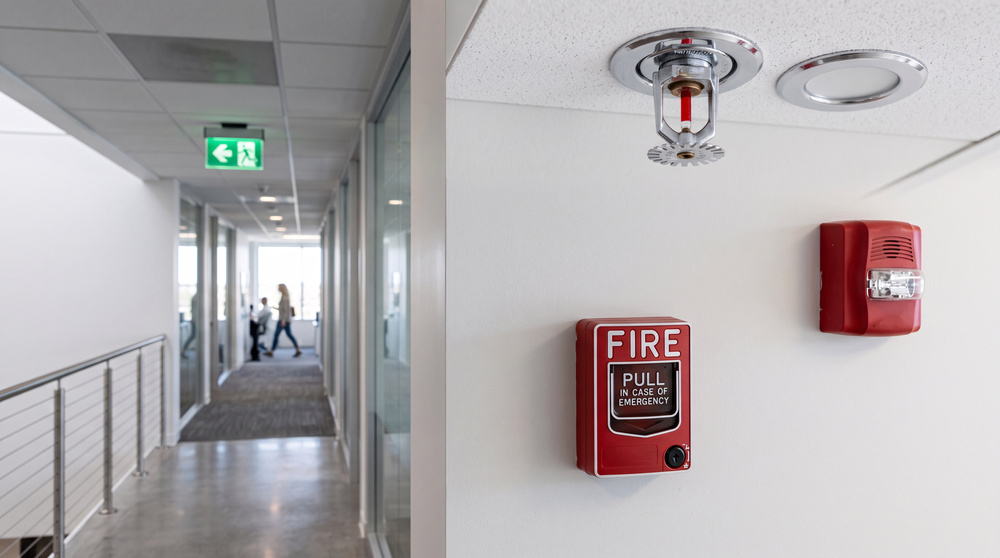
A commercial fire alarm system relies on connected components to detect fire conditions, alert occupants, and support a timely emergency response.
Understanding how these components work together helps building owners in Greater Cincinnati, Dayton, and Southern Ohio make informed decisions about inspection, maintenance, and repair. The sections below explain each major component and the inspection priorities that support reliable system performance and ongoing code compliance.
Key Takeaways
- A fire alarm system depends on the control panel, initiating devices, and notification appliances working in sequence.
- Addressable panels identify the exact device that triggered an alarm, while conventional systems only identify a zone.
- Pull stations, smoke detectors, and heat detectors each serve a different initiating function within the same system.
- Southern Ohio commercial buildings face seasonal humidity and temperature swings that affect inspection priorities and device performance.
How Fire Alarm Components Work Together to Protect Building Occupants
A commercial fire alarm system relies on multiple components working together to detect hazards, notify occupants, and support a timely emergency response. Understanding the role of each part helps facility managers maintain reliable system performance and make informed decisions about inspection, maintenance, and future upgrades.
The Fire Alarm Control Panel
The fire alarm control panel, often called the FACP, functions as the brain of the entire system. It receives signals from initiating devices, processes them, and triggers the appropriate notification and monitoring response. Commercial panels also store event history, which technicians use to diagnose recurring trouble signals. Facility managers should know their panel’s manufacturer and model, since programming and parts availability vary by brand.
Initiating Devices Detect Fire Conditions
Initiating devices are the sensors that first detect a potential fire condition. Smoke detectors, heat detectors, and manual pull stations all fall into this category. Each device type responds to a different trigger, so a building’s layout and use determine which combination is appropriate. A kitchen area, for example, may rely more heavily on heat detection to avoid nuisance alarms from cooking smoke.
Notification Appliances Alert Building Occupants
Notification appliances include horns, strobes, and speakers that alert people inside the building once the panel confirms an alarm condition. These devices must be audible and visible throughout occupied spaces, including areas with high ambient noise, such as mechanical rooms or loading docks. Placement and spacing are governed by code requirements tied to room size and use.
Addressable Systems Improve Emergency Response
Addressable fire alarm systems identify the exact device that activated, down to a specific room or hallway. Conventional systems only narrow the alarm to a wired zone, which can cover an entire floor or wing. Larger commercial buildings in the region increasingly use addressable panels because they speed up response time during an actual event. Smaller buildings may still operate on conventional systems that were installed years ago.
Monitoring Connections Notify Emergency Responders
Fire alarm monitoring connects the control panel to a monitoring service that contacts local fire departments when an alarm activates. This connection is what turns a local alert into a call for emergency response. Monitoring equipment must be tested regularly to confirm the signal path stays active. A building without confirmed monitoring cannot be considered fully protected, even if its detectors and panel work correctly.
System Programming Coordinates Device Communication
System programming determines how the panel interprets signals from each connected device and what actions it triggers in response. Programming changes are often needed after tenant buildout, HVAC modifications, or equipment relocations. Incorrect programming can cause delayed notification or unnecessary alarms, which disrupt daily operations. Technicians typically document programming changes so future service visits reference accurate system records.
Key Inspection Priorities for Southern Ohio Commercial Buildings
A properly designed fire alarm system still depends on routine inspection and maintenance to remain effective. Focusing on common inspection priorities helps commercial property owners identify potential issues early while supporting reliable operation and ongoing code compliance.
Account for Seasonal Humidity During Detector Inspections
Southern Ohio’s summer humidity can affect smoke detector sensitivity, particularly in buildings without consistent climate control. High moisture levels sometimes cause detectors to read false particulate matter, leading to nuisance alarms. Buildings with older HVAC systems are more prone to this issue during peak summer months. Inspection schedules should account for seasonal humidity swings rather than relying on a single annual visit.
Test Battery Backup Systems Regularly
Fire alarm systems rely on battery backup to maintain operation during power outages, which are more common during summer storm season in the region. Batteries degrade over time and lose capacity even if the system otherwise tests as functional. Facility managers should confirm battery replacement dates are tracked as part of routine testing. A weak battery can leave a building without alarm coverage during exactly the type of outage it is meant to handle.
Maintain Documentation for Authorities Having Jurisdiction
Local fire departments and Authorities Having Jurisdiction expect clear, organized documentation during inspections. This includes test records, device inventories, and as-built plans showing device locations throughout the building. Buildings that keep this documentation current typically move through inspection faster than those scrambling to locate records. Documentation gaps are a common reason inspections get flagged for follow-up.
Verify Pull Station Accessibility and Placement
Pull stations must remain unobstructed and clearly visible along exit routes at all times. Renovations, furniture placement, and signage changes can unintentionally block access to a pull station over time. Facility managers should periodically walk exit paths to confirm that nothing has shifted since the last inspection. This is a simple check that often gets missed between formal testing cycles.
Respond Promptly to Panel Trouble Signals
A fire alarm control panel that displays a trouble signal is reporting a fault somewhere in the system, not necessarily a fire condition. Ignoring trouble signals for even a short period can allow a small issue to develop into a larger system failure. Facility managers should have a clear internal process for who responds when a trouble signal appears. Quick response to trouble signals keeps the system in a testable, compliant condition between scheduled inspections.
Keep Your Fire Alarm System Ready for Inspection Season
A reliable fire alarm system depends on properly functioning components, routine inspections, and timely repairs. R.P. Biederman Co. provides commercial fire alarm inspection, monitoring, maintenance, programming, and repair services throughout Greater Cincinnati, Dayton, Southern Ohio, and Northern Kentucky.
Contact us to schedule an inspection or discuss the fire alarm solution that best fits your facility.
Frequently Asked Questions
What are the four types of fire alarm systems?
Commercial buildings typically use conventional, addressable, hybrid, and wireless fire alarm systems. Conventional systems identify alarms by zone, addressable systems pinpoint the exact device, and hybrid or wireless systems combine features for flexible installation in varied building layouts.
How much should a fire alarm system cost?
Cost depends on building size, device count, panel type, and whether the project involves new installation or an upgrade. Facility managers should request a site-specific evaluation rather than relying on generic pricing estimates found online.
What is the fire alarm system?
A fire alarm system is a network of devices that detects fire conditions and alerts building occupants and emergency responders. It includes a control panel, initiating devices like detectors and pull stations, and notification appliances such as horns and strobes.